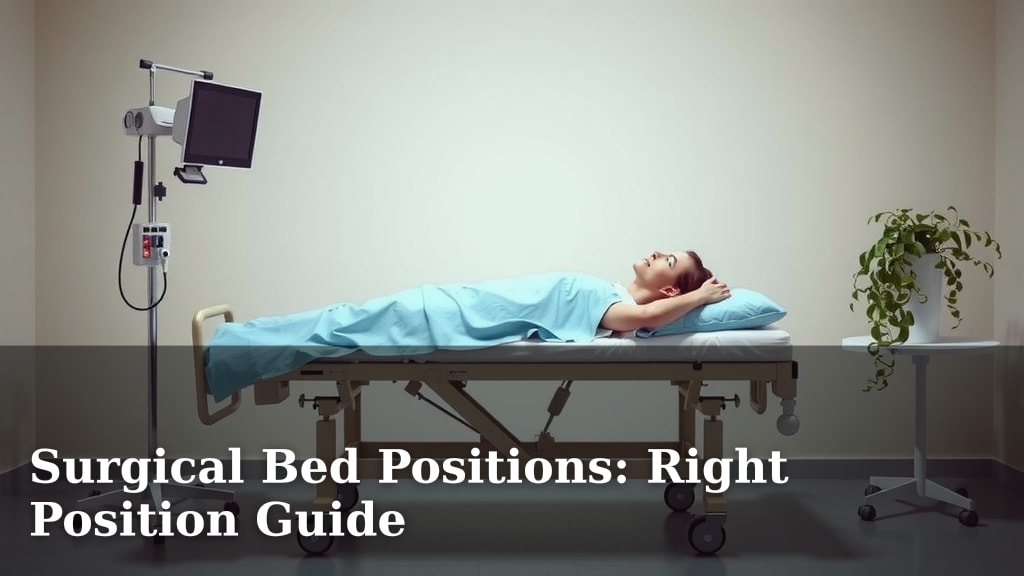
Surgical Bed Positions: Right Position Guide
The right surgical bed position is vital for patient safety and surgical success. It helps your doctor reach the surgical area easily and can improve breathing and circulation during the procedure. Knowing about common positions like supine, prone, and lateral recumbent can ease your mind before surgery.
Different surgeries require specific patient positioning for optimal outcomes. Your medical team carefully chooses the best position based on the type of surgery you’re having. This ensures both your comfort and the surgeon’s access for the best possible results.
- The right bed position protects you during surgery.
- It helps your surgical team work effectively.
- Common positions include supine, prone, and lateral.
- Your doctor selects the best position for your specific procedure.
- Always ask your care team if you have questions.
Let’s walk through the different surgical bed positions and why they matter for your procedure.
You’re probably wondering about all the different ways they might position you on that operating room table. It can seem a bit strange, but each position has a really important job. It’s all about making sure your surgery goes smoothly and safely. We’re here to break down why these positions are so vital for your procedure.
Understanding Your Surgical Positioning
The right patient position is key for a successful operation. It helps your surgical team get the best possible access to the area they need to work on. It also helps keep you stable and can improve how your body functions during surgery. Many guidelines point to good positioning as a cornerstone of patient safety (Association of periOperative Registered Nurses).
Think of it like this: your surgeon needs a clear view and steady access, just like a mechanic needs the right angle to fix your car. Your medical team carefully chooses a position that balances the surgeon’s needs with your body’s well-being. This can prevent injuries and ensure the surgery is as efficient as possible.
Why Position Matters So Much
Patient positioning isn’t just about making the surgeon comfortable. It directly impacts your physiological well-being during the operation. Proper positioning can help maintain good blood flow and make breathing easier. It also prevents nerve damage and pressure sores.
For example, some positions can affect how blood circulates or how much pressure is on certain nerves. Your care team uses specialized padding and supports to protect your body. They constantly monitor you to prevent any issues related to your position. This attention to detail is why positioning is a critical part of your surgical care plan.
Common Surgical Positions Explained
Let’s look at some of the most frequent positions you might encounter. Understanding these can help demystify what happens when you’re in the operating room.
The Supine Position: Lying on Your Back
This is perhaps the most common position. You’ll be lying flat on your back, just like you might sleep. It’s often used for surgeries on the chest, abdomen, pelvis, and limbs. Your arms might be placed at your sides or on arm boards.
When you’re in the supine position, your body is in a neutral alignment. This makes it easy for surgeons to access many parts of your body. For procedures on the front of your body, this position is usually the most practical. It allows for straightforward access to organs and tissues.
Key Considerations for Supine
Even in this standard position, there are things to watch out for. It’s important to prevent your head from rolling side to side. Your heels and elbows need extra padding to avoid pressure sores. If the surgery is long, your care team will make adjustments.
The Prone Position: Lying on Your Stomach
This is the opposite of supine. You’ll be lying face down on the operating table. This position is often used for surgeries on the back, spine, or the back of the head. It can also be used for some rectal or buttock surgeries.
In the prone position, it’s absolutely vital to protect your airway. Special supports, often called “pronation devices,” are used to keep your head stable and allow for breathing. Your chest and pelvis are also supported to reduce pressure on your abdomen.
Challenges and Precautions for Prone
We found that positioning a patient prone requires careful planning. It can affect blood flow and breathing more than supine. The team needs to make sure there’s no pressure on your eyes or the front of your body. They also check for any potential nerve compression.
The Lateral Recumbent Position: Lying on Your Side
This means you’ll be lying on either your left or right side. You might be positioned with your knees slightly bent, like you’re sleeping on your side. This is frequently used for surgeries on the chest, kidneys, or hips.
When you’re in a lateral position, a supportive beanbag or rolls are often used. These keep you stable and prevent you from rolling forward or backward. It’s important that your body is well-aligned to avoid strain on your spine.
Adjustments in the Lateral Position
Your arms will usually be positioned carefully. One arm might be extended, while the other is bent and supported. This helps keep pressure off your nerves and blood vessels. Your legs are also positioned to prevent them from pressing on each other.
Other Specialized Positions
Beyond these common ones, there are other positions used for specific procedures. These might include sitting up (Fowler’s position), or positions where your body is tilted.
The Lithotomy Position
This position is often used for gynecological, rectal, and urinary tract surgeries. You’ll lie on your back with your feet raised and supported in stirrups. This provides excellent access to the pelvic region.
The Trendelenburg and Reverse Trendelenburg Positions
The Trendelenburg position involves tilting the operating table so your head is lower than your feet. This can help gravity pull abdominal organs away from the pelvis. The Reverse Trendelenburg is the opposite, with your head higher than your feet. This can improve breathing and reduce blood flow to the head.

Your Comfort and Safety: A Top Priority
No matter the position, your comfort and safety are the top priorities. Your care team uses a variety of padding, straps, and supports. These are designed to distribute your weight evenly and protect your skin and nerves.
Before you’re positioned, they’ll assess your skin. They’ll also identify any areas that are at higher risk for injury. During the surgery, the anesthesia provider and nurses will regularly check on you. They want to ensure you’re safe and that no pressure points are causing problems.
A Checklist for Your Peace of Mind
Here’s a quick rundown of what your team is doing to keep you safe:
- Ensuring your head and neck are properly aligned.
- Using padding on all pressure points like elbows, heels, and hips.
- Securing you gently but firmly to the table.
- Checking for any potential nerve compression.
- Monitoring your breathing and circulation throughout.
- Making adjustments as needed during the procedure.
It’s always a good idea to talk to your surgeon or anesthesiologist about how you’ll be positioned. They can answer any specific questions you have about your procedure. Knowing what to expect can really help ease your mind!
Conclusion
Understanding surgical bed positions is key to feeling prepared for your procedure. Your medical team meticulously selects the right position, like supine, prone, or lateral, for safety and surgical access. They use special padding and supports to protect you throughout. This careful attention ensures the best possible outcome for your surgery.
Don’t hesitate to ask your surgeon or anesthesiologist about your specific positioning plan. Knowing what to expect can greatly reduce any pre-operative anxiety. Your comfort and well-being are always their top priorities.
Frequently Asked Questions
Will I feel anything when they move me into the surgical position?
You will be under anesthesia, so you won’t feel any sensations or discomfort when your body is moved into the surgical position. The operating room team is trained to move patients safely and efficiently while you are asleep.
How long will I be in a specific surgical position?
The duration you remain in a particular position depends on the length of your surgery. Your medical team constantly monitors you and will make adjustments if needed to ensure your comfort and safety throughout the procedure.
Can my surgical position affect my breathing?
Yes, certain positions can influence breathing. For example, the prone position requires special attention to ensure your airway is protected and breathing is not obstructed. Your anesthesia provider will monitor your breathing closely.
What happens if I have a pre-existing condition that makes certain positions difficult?
It’s very important to inform your surgical team about any pre-existing conditions, such as joint problems or skin sensitivities. They can then make specific adjustments to positioning and use extra padding to accommodate your needs.
How do they keep me from moving or falling off the operating table?
Your safety is a major concern. You will be secured to the operating table using gentle but firm straps or specialized padding. This ensures you remain stable in the correct position throughout the surgery.