2 Twin Beds vs Queen Bed: The Complete Guide to Choosing What’s Right for Your Space
When you’re furnishing a bedroom, one of the biggest decisions you’ll face is choosing between two twin beds or a single queen bed. It sounds simple on the surface, but there’s actually a lot more to consider than you might think. I’m going to walk you through everything you need to know to make the right choice for your lifestyle, your bedroom layout, and your budget.
The truth is, this decision affects more than just how you sleep at night. It impacts your room’s functionality, your ability to accommodate guests, how much space you have left to move around, and even your relationship dynamics if you’re sharing the room with a partner. Let’s dive deep into what makes each option unique and help you figure out which one is actually the best fit for you.
Understanding the Basic Dimensions: Why Size Actually Matters
Before we can compare these two options fairly, we need to understand exactly what we’re working with. Many people think they know the dimensions, but there are actually some surprising nuances that catch people off guard.
Twin Bed Dimensions Explained
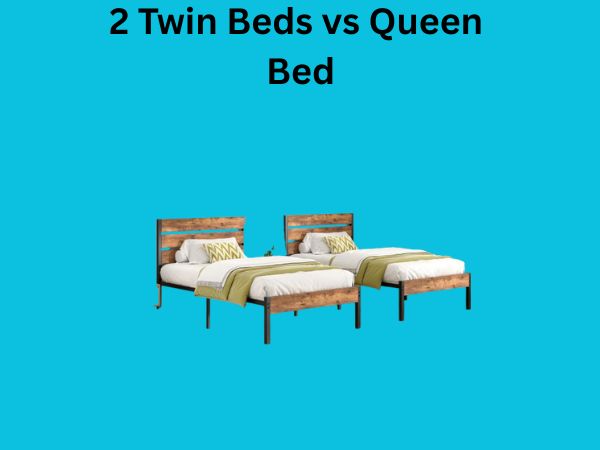
A standard twin bed measures 38 inches wide by 75 inches long. When you’re thinking about having two of these beds, you’re essentially looking at a combined sleeping surface of 76 inches wide if you push them together, or 38 inches wide if you keep them separate. That’s important to visualize because it changes how the beds function in your room.
Twin beds are often the go-to choice for children’s rooms and smaller bedrooms, but they’re also becoming increasingly popular in adult spaces. Think of a twin bed as the reliable workhorse of the mattress world—it does the job without taking up excessive space.
Queen Bed Dimensions Explained
A queen bed, on the other hand, measures 60 inches wide by 80 inches long. So if you’re comparing a queen to two twins, you’re looking at 60 inches of width versus the 76 inches you’d get from pushing two twins together. The queen is shorter in width but longer in length than the combined twins.
A queen bed is the Goldilocks of bed sizes for many people—not too small, not too sprawling, just right for a couple or a single sleeper who likes space to move around.
Space Consideration: How Each Option Fits in Your Bedroom
Let me be honest with you: the space in your bedroom is going to be the deciding factor for many people. It’s like trying to solve a puzzle, and if the pieces don’t fit right, nothing else matters.
Room Layout with Two Twin Beds
Having two twin beds gives you flexibility that you simply don’t get with a queen. You can arrange them in different ways depending on what serves your room best:
- Push them together against one wall to create a larger sleeping surface
- Place them on opposite sides of the room for a guest bedroom setup
- Angle them in corners to maximize floor space
- Keep them separated with a nightstand or small table between them
This flexibility means that even if you’re not sure exactly how you want to use the room, two twins can adapt to your needs over time. If you later decide you want more open floor space, you can push them against the wall. If you find you prefer sleeping separately, you can spread them apart.
Room Layout with a Queen Bed
A queen bed is more of a committed choice. Once you place it in your room, it typically takes up one wall, and you’re less flexible about repositioning. However, this commitment has its own advantage—it forces a cleaner, simpler room design. There’s something psychologically satisfying about a bedroom with a centered queen bed and matching nightstands on either side.
The trade-off is that you’ll have less usable floor space in smaller rooms. If your bedroom is on the compact side, a queen bed can make the room feel cramped, while two twins might actually leave you with more navigable space.
The Comfort Factor: How They Feel When You’re Actually Sleeping
Here’s where personal preference really comes into play. Comfort isn’t just about the size of the mattress—it’s about how you sleep and what makes you feel at ease.
Sleeping Alone on Each Option
If you’re sleeping alone, a queen bed gives you significantly more room to sprawl out. You can diagonally stretch across the mattress without your feet hanging off the end. For hot sleepers, this extra space is a game-changer because you can move to a cooler spot when you need to.
A twin bed, while cozy, can feel restrictive if you’re a active sleeper who moves around a lot during the night. You might find yourself waking up because you’ve hit an edge or feel cramped. That said, some people find the cozy feeling of a twin bed to be actually comforting, almost like being wrapped in a cocoon.
Sharing a Bed: Couples and Two Sleepers
This is where the comparison gets really interesting. If two people are sharing a bed, the math suddenly becomes very different. A queen bed gives you just 30 inches of width per person—that’s roughly the width of a baby crib per person. When you push two twin beds together, you get 38 inches per person, which is noticeably more spacious.
Many couples who thought a queen would be sufficient actually find themselves arguing over blankets and personal space after living with it for a while. Two twins pushed together can feel like a luxury upgrade because each person still has breathing room. It’s the difference between sleeping in a bed together and actually having your own sleeping territory while still being close to your partner.
Guest Room Functionality: Which Setup Accommodates Visitors Better
How you use your bedroom matters enormously in this decision. Are you frequently hosting guests? Or is this primarily a master bedroom where only you (and maybe a partner) sleep?
Two Twin Beds for Guest Accommodations
Two twin beds shine when you’re regularly having overnight visitors. Think about it—if your parents visit, or a friend needs a place to stay, each person gets their own bed. No awkward “do we share?” conversations. Two separate beds also means no tossing and turning keeping someone else awake.
This setup is absolutely ideal if you have children who sometimes sleep in your room, or if you run a bed and breakfast style of hospitality. It’s like having a hotel room in your own home.
Queen Bed for Guest Accommodations
A queen is fine for hosting guests, but they might be sharing if you’re putting two people in the room. This works great for couples visiting, but less great for friends or family members who haven’t slept in the same bed before.
Budget Considerations: The True Cost Comparison
Let’s talk about the money side of this equation because it’s more complex than just comparing mattress prices.
Initial Purchase Costs
Two twin mattresses aren’t necessarily cheaper than one queen mattress. In fact, if you’re buying quality mattresses, two twins might actually cost more than a decent queen bed. You also need to factor in the cost of bed frames for each twin, plus potentially two sets of sheets versus one queen set.
- Twin mattress typical price range: $150-$600 each
- Queen mattress typical price range: $300-$1,000
- Twin bed frame: $100-$400 each
- Queen bed frame: $150-$500
When you do the full math, two twins can absolutely cost more than a queen setup, especially if you’re buying quality pieces.
Long-Term Value and Flexibility
Here’s something people don’t always consider: the long-term flexibility of two twin beds actually provides value beyond the initial purchase. If you ever need to reconfigure your room, move one bed to another room, or change how you’re using the space, having two twins is much easier to adapt.
A queen bed is a more permanent commitment. You can eventually move it or sell it, but in the moment, it’s less flexible. This matters less if you know for certain this is your forever bedroom setup, but more if your life situation might change.
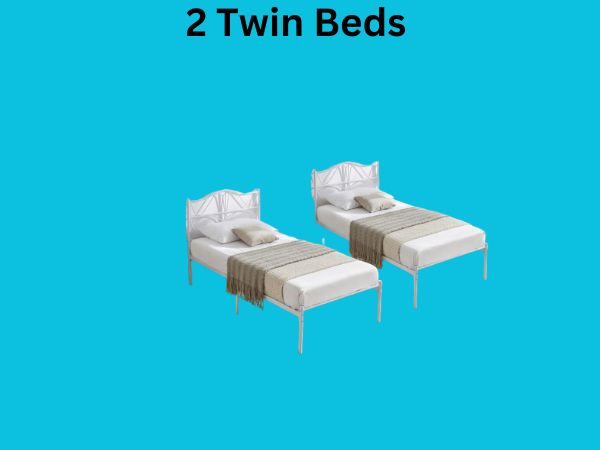
Bedroom Aesthetics: The Visual Impact of Your Choice
Don’t underestimate how your bed choice affects the whole feeling of your room. The visual impact is real and affects your mood every time you walk in.
The Look of Two Twin Beds
Two twin beds can create a more modern, minimalist aesthetic, especially if you keep them separated or angled creatively. They also evoke a sense of youth and flexibility. However, some people find them to look less “grown up” or romantic compared to a queen bed.
The styling options are interesting though—you can use different colored bedding on each bed for a creative look, or match them perfectly for symmetry. You have more design freedom with two separate pieces.
The Look of a Queen Bed
A queen bed presents a more traditional, romantic, and established appearance. There’s something inherently more luxurious about a centered queen bed with matching nightstands and lamps. It feels more put-together and intentional.
However, this traditional look might not suit everyone’s taste or lifestyle, and it’s less flexible if you want to create a unique, personalized bedroom design.
Practical Considerations: Maintenance and Cleaning
This might seem minor, but the practical realities of living with your choice matter more than you’d think.
Changing Sheets on Twins vs Queen
Changing sheets on a queen is actually faster and simpler because you’re dealing with one fitted sheet and one flat sheet. With two twins, you’re essentially changing sheets twice. It’s double the work, double the linens to store, and double the chance of mixing up which sheets go where.
If you hate doing laundry, this is a point in the queen bed’s favor. If you don’t mind the extra work for the flexibility, then twins are fine.
Underneath Cleaning
Vacuuming or sweeping under your bed is significantly easier with two lighter twin beds that you can move separately. A queen bed is heavier and bulkier, making it more annoying to move when you need to clean underneath.
Special Circumstances: When One Option Clearly Wins
Let’s look at some specific life situations where the choice becomes obvious.
Kids’ Bedrooms
For children’s rooms, twin beds are typically the better choice. They’re appropriately sized for growing bodies, and if you have multiple children, two twins make more sense than pushing a queen into a small space.
Master Bedrooms for Couples
For couples in their master bedroom, a queen is often the obvious choice—it’s what people expect and what fits most master bedroom designs. However, active sleepers or couples with very different sleep schedules might find two twins pushed together to be transformative.
Spare Bedrooms
Spare bedrooms benefit from two twin beds because you never know if you’ll be hosting one guest or two, a couple or individuals.
Small Studio Apartments
In a studio where your bedroom is also your living space, a queen typically makes more sense because it looks intentional and clean. Two twins can look cluttered in a small space.
The Trial Period: How to Make Your Final Decision
Here’s my suggestion: before you commit to a major purchase, try to spend a night or two sleeping on each configuration if possible. Visit a friend who has two twins pushed together, or sleep on a queen at a hotel. Feel what each option actually feels like rather than just imagining it.
Real experience beats speculation every single time. Your body will tell you what it needs.
Making Your Choice: The Decision Framework
Let me give you a practical framework for making this decision:
Choose two twin beds if:
- You frequently host overnight guests
- You have a small bedroom and need flexibility
- You sleep alone and prefer room to spread out with the flexibility of two separate pieces
- You value design flexibility and unique room styling
- You like the idea of easily moving one bed to another room in the future
Choose a queen bed if:
- You’re a couple and want the traditional master bedroom setup
- You have a spacious bedroom where size isn’t a constraint
- You prefer simplicity in bedding and cleaning
- You want a more formal, established aesthetic
- You sleep alone and don’t need the extra width of two twins
Conclusion
The choice between two twin beds and a queen bed isn’t about which is objectively better—it’s about which is better for your specific situation. Two twin beds offer flexibility, guest accommodation, and potentially more sleeping space for couples, while using your room’s floor space more efficiently. A queen bed provides simplicity, a more traditional aesthetic, and ease of maintenance.
Take time to honestly assess your room size, your sleeping situation, how often you host guests, and your design preferences. Consider your budget not just for the initial purchase but for the ongoing cost of linens and maintenance. Most importantly, prioritize your comfort because you’re going to spend a third of your life on this bed.
Neither choice is wrong. The right choice is the one that makes you happy every time you walk into your bedroom and the one that makes you sleep soundly every night. Trust your instincts, do your research, and don’t rush the decision. Your future self will thank you for taking the time to choose wisely.
Frequently Asked Questions
Can I use the same sheets on two twin beds pushed together as I would on a queen?
No, you cannot use queen sheets on two twin beds pushed together. While the combined width of two twins (76 inches) is actually wider than a queen (60 inches), the length is different and the fitted sheet won’t work properly. Additionally, there’s a seam down the middle that will be uncomfortable. You’d need to use twin sheets on each bed or purchase special split queen sheets designed for this setup.
Which option is better for a small bedroom?
Two twin beds are generally better for small bedrooms because they offer more flexibility in placement and can leave more usable floor space when arranged strategically. A queen bed, while taking up more total width when combined with two twins, forces a more fixed layout that might make a small room feel cramped. However, it depends on your specific room dimensions and layout.
Is a queen bed more comfortable for couples than two twins pushed together?
Not necessarily. While a queen is the traditional choice for couples, two twins pushed together actually provide more personal space per person (38 inches versus 30 inches). Many couples find two twins pushed together to be more comfortable because each person has their own sleeping area while still being close. It depends on your specific needs and preferences.
How much more do two mattresses cost compared to one queen?
The cost varies significantly based on mattress quality and brand. Budget twin mattresses might be $150-$300 each, while budget queen mattresses might be $300-$500. However, quality matters more than size, and two quality twins can easily cost more than one quality queen. You also need to factor in bed frames and bedding, which doubles the cost with two twins.
Can I use a queen bed frame for two twin mattresses?
No,